
A 527 m s.l.m. sul colle Brocco, raggiungiamo il comune di Broccostella, nel cui territorio scorre indisturbato il fiume Fibreno.
Broccostella è una porta verde tra la Valle del Liri e la Valle di Comino, la cui storia comunitaria inizia già nel neolitico, come testimoniano le suppellettili e le armi in pietra ritrovate sulla collina che domina il lago di Fibreno.
Following the path that starts from Colle Brocco, you can enjoy the wide view on the Valley of Sora and on the top of the hill, Brocco Alto, visit the church of S. Michele Arcangelo, which together with the Castle of Brocco represents the first settlement in the area. The Castle however was destroyed by Frederick II of Svevia in 1230, just like other fortified strongholds in the Duchy of Sora, and the ruins can now be reached only through a lonely and narrow cobbled street.
Continuando la discesa verso la pianura, incontriamo la chiesa della Madonna delle Chiaie, risalente probabilmente al XV secolo.
Il suo aspetto rurale, la delicata intersezione tra la sua facciata con il dolce pendio e gli ulivi che la circondano, si coniugano perfettamente con il ritmo lento e naturale della vita del borgo e il sereno scorrere delle giornate nella Valcomino.
A peacefulness however shattered in the 20th century during World War II by the battle between the 8th English army and the German troops, whose mortar bullet fell on the small church and hit the altar without though exploding. The documents found and the scars left make it easy to grasp how this land and its buildings have fought to preserve their own religious-cultural identity despite the natural disasters and the battles that took place here over the years, thus showing a strong spirit that is still a peculiarity of its people.
Proseguendo verso il centro cittadino, incontriamo un’altra architettura religiosa che ribadisce il forte sentimento di appartenenza e di spiritualità dei Broccostellani.
Connotata da linee nitide, la chiesa della Madonna della Stella, si presenta all’esterno rivestita interamente in mattoni, mentre all’interno l’atmosfera essenziale si tinge di colori e luce naturale, grazie alle undici vetrate artistiche che sono state realizzate in occasione della costruzione della chiesa.
Come la sua comunità, si presenta fiera, accogliente, spoglia di decorazioni non necessarie, ma di carattere e generosa, diventando punto di arrivo e di partenza dei viaggiatori della Valcomino.
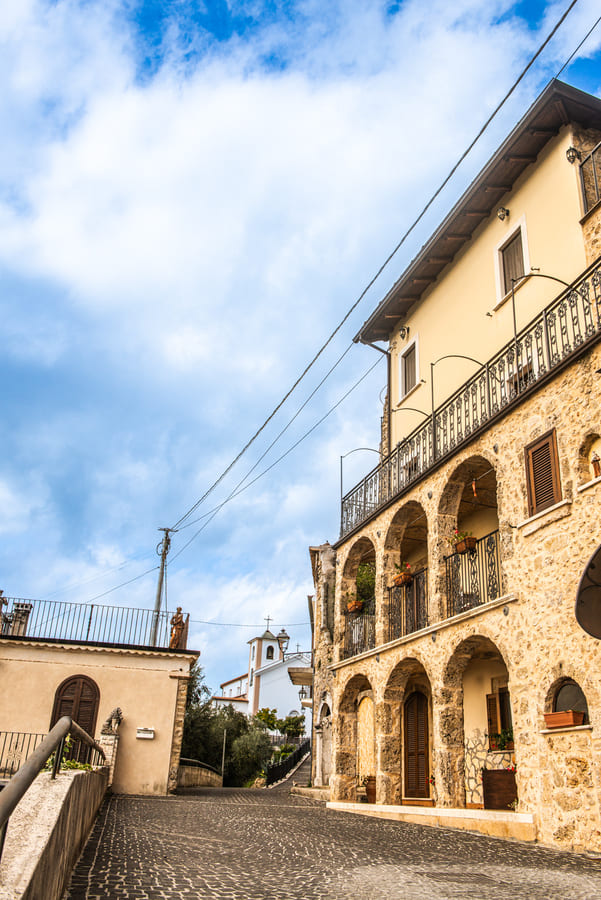
Nestled on a hill, Colle Brocco, at 527 m above sea level, is the town of Broccostella, a small municipality where the Fibreno river flows placidly. Broccostella is a green gateway between the Liri Valley and the Comino Valley and the history of this community can be traced back up to the Neolithic age, as proved by the furnishings and stone weapons found on the hill overlooking Lake Fibreno.
Following the path that starts from Colle Brocco, you can enjoy the wide view on the Valley of Sora and on the top of the hill, Brocco Alto, visit the church of S. Michele Arcangelo, which together with the Castle of Brocco represents the first settlement in the area. The Castle however was destroyed by Frederick II of Svevia in 1230, just like other fortified strongholds in the Duchy of Sora, and the ruins can now be reached only through a lonely and narrow cobbled street.
While walking down towards the plain, it is worth stopping by at the church of Madonna delle Chiaie, probably dating back to the 15th century. Its rural appearance, the delicate intersection between its façade and the softly sloping hill all around covered in olive trees, perfectly combine with the slow and natural pace of the life of the small town and the peaceful flow of the days in the Comino Valley.
A peacefulness however shattered in the 20th century during World War II by the battle between the 8th English army and the German troops, whose mortar bullet fell on the small church and hit the altar without though exploding. The documents found and the scars left make it easy to grasp how this land and its buildings have fought to preserve their own religious-cultural identity despite the natural disasters and the battles that took place here over the years, thus showing a strong spirit that is still a peculiarity of its people.
Keeping walking towards the town centre, on the way you can stop at another religious building confirming the strong feeling of belonging and spirituality of Broccostellani, the people from Broccostella. It is the church of Madonna della Stella, marked by sharp lines and entirely covered in bricks on the outside: inside the basic and simple atmosphere is filled with natural colours and light, thanks to the eleven artistic windows that were installed when the church was built. Like its community, it proudly shows itself, looking welcoming, yet stripped of unnecessary decorations, with a distinctive and generous character, thus becoming a point of arrival and departure for travellers in the Comino Valley.
"Living Villages" chain of the Ciociaria-Valle di Comino DMO:
Un po’ di storia … “Broccostella in Fiera” è una manifestazione radicata nel tempo in quanto istituita nell’adunanza del Consiglio comunale del 24 luglio 1863, tenuta sotto la presidenza del Sindaco Giuseppe Ferri. La ricorrenza, fissata dal Consiglio comunale, è prevista, come ormai tradizione, per la prima domenica successiva all’8 settembre.
La Fiera di Broccostella quindi, istituita nel 1863, ha avuto molteplici edizioni e dopo un breve periodo di interruzione, è stata riproposta con continuità negli ultimi 15 anni e rappresenta un appuntamento importante e sentito dalla comunità. L’obiettivo di questo evento nel passato era facilitare gli scambi commerciali per i cittadini che potevano, in questa occasione, acquistare animali da allevamento, attrezzature e prodotti per l’agricoltura difficilmente reperibili nella quotidianità.
Oggi, come del resto negli ultimi anni, l’evento ha subito un’evoluzione dovuta alle dinamiche sociali, culturali ed economiche del territorio che hanno condotto ad incentrare il tema principale della fiera nella valorizzazione della sinergia tra artigianato, arte e turismo, attraverso l’esposizione di prodotti artigianali locali, degustazioni e intrattenimento artistico. La promozione turistica del territorio è un obiettivo da perseguire, anche grazie a questo particolare evento che nel tempo ha ospitato artisti, durante lo spettacolo serale, anche di fama nazionale.
La Fiera in sé rievoca la storia broccostellana. La possibilità di mantenere attivo questo evento sarà garanzia di continuità della memoria e delle tradizioni. Le tradizioni locali devono essere mantenute vive. Questo evento per Broccostella rappresenta, di fatto, l’unica occasione dell’anno per rievocare, confermare ed evidenziare le tradizioni enogastronomiche, artigianali e storiche. Tra i vari prodotti caratteristici, tra i quali l’olio di oliva che una locale attività esporta in tutto il mondo, emerge in particolare il consumo della carne di capra, attraverso la preparazione di piatti considerati “tipici” della comunità broccostellana. Infatti, nel periodo di settembre, è usanza cucinare tagliolini, gnocchi con il sugo di carne di capra.
Veniva preparata questa ricetta in quanto la capra era considerato un animale “povero” che si alimentava soltanto con il pascolo dell’erba non richiedendo particolari attenzioni per la sua cura e sopravvivenza garantendo in tal modo una adeguata gestione dell’economia familiare.

Il programma del FestiVal di Comino sarà organizzato in sette grandi aree tematiche, per offrire un racconto completo e variegato della Valle, valorizzandone identità, storia e potenzialità.
Clicca sulle aree tematiche per scoprire gli eventi in programma.
Il calendario è in continuo aggiornamento con nuove attività: torna spesso per scoprire tutte le novità.

Via Umberto I, 1 - 03030 Pescosolido (FR)
Con il contributo della


DMO Ciociaria Valle di Comino 2024 C.F: 91033330605 | Tutti i diritti riservati. | by idealmente.net
| Cookie | Durata | Descrizione |
|---|---|---|
| cookielawinfo-checkbox-analytics | 11 months | This cookie is set by GDPR Cookie Consent plugin. The cookie is used to store the user consent for the cookies in the category "Analytics". |
| cookielawinfo-checkbox-functional | 11 months | The cookie is set by GDPR cookie consent to record the user consent for the cookies in the category "Functional". |
| cookielawinfo-checkbox-necessary | 11 months | This cookie is set by GDPR Cookie Consent plugin. The cookies is used to store the user consent for the cookies in the category "Necessary". |
| cookielawinfo-checkbox-others | 11 months | This cookie is set by GDPR Cookie Consent plugin. The cookie is used to store the user consent for the cookies in the category "Other. |
| cookielawinfo-checkbox-performance | 11 months | This cookie is set by GDPR Cookie Consent plugin. The cookie is used to store the user consent for the cookies in the category "Performance". |
| viewed_cookie_policy | 11 months | The cookie is set by the GDPR Cookie Consent plugin and is used to store whether or not user has consented to the use of cookies. It does not store any personal data. |

